
























For generations, international rugby’s mid-year and autumn windows existed as a series of loose, disjointed narratives.
They were high-grade matches, certainly, but ultimately standalone chapters in an uncodified book. On Saturday, that fragmented history is swept aside. The launch of the inaugural Nations Championship represents the sport’s definitive big bang: a highly structured sprint where every collision, bonus point, and drop-goal across two hemispheres funnels toward a singular, grand destination.
The ultimate barometer for this revolutionary shake-up will come late in the dark November evenings at Allianz Stadium in London. The newly conceived Finals Weekend is the tournament's boldest stake in the ground: a three-day, six-match festival designed to condense the sport's greatest rivalries into an unapologetic, winner-takes-all crescendo. If the metric of success in modern sport is the collision of high stakes and packed turnstiles, London in November is the place to be.
To understand the sheer scale of the shift, one only needs to speak to Sam Warburton. The former Wales and British and Irish Lions captain spent a career at the absolute coalface of the sport’s traditional North-versus-South divide. For him, the new structure elevates an old argument into something tangible.
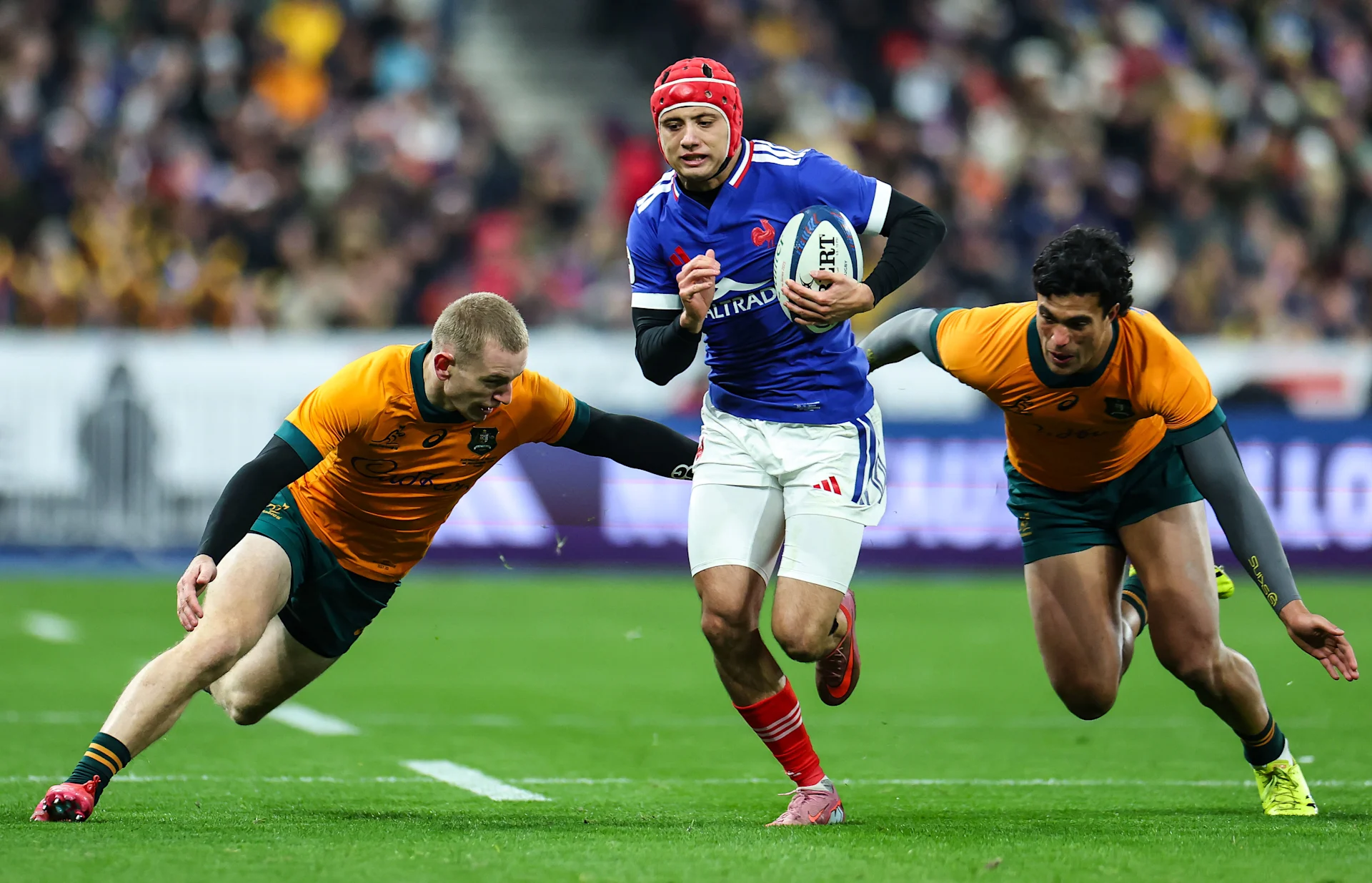
'Who is better: North or South?’
"We’ve never had that in a formalised format before," Warburton says, his voice carrying the quiet authority of a man who has led tours into the intense arenas of Brisbane and Pretoria. "It has always just been an open debate. There are teams that are hugely patriotic and proud of their country, and this gives everyone a chance to ask: who is better, North or South? I think it will answer who the best team in the world is in that calendar year, but also where the power lies from a hemispheric perspective. It will give the North or South some serious bragging rights."
Warburton’s childhood memories of international rugby are starkly different from the hyper-competitive landscape he came to inherit. Growing up in a transitional era for Welsh rugby, he watched the Southern Hemisphere heavyweights operate on a different tactical plane. "Growing up watching Wales, we didn’t have the strongest team during my childhood. I remember seeing Wales lose by 30, 40, or 50 points," he reflects.
The gap has narrowed, closing incrementally through the professional era as the likes of France, Ireland, and England established their own domestic and international standard. Yet the World Cup ledger remains fiercely lopsided. "We can’t deny that the Southern Hemisphere have performed significantly better at World Cups, but this Nations Championship is going to be a great subplot. The games have become closer and closer, and the Nations Championship will only push that competition further."
'Player profiles and skill sets vary massively'
The technical beauty of the tournament lies in its sheer tactical volatility. Over the next month, European sides will be dragged entirely out of their comfort zones, forced to adapt to environmental and atmospheric extremes. It is an experience Warburton remembers vividly.
"I love the diversity that it brings when you play Japan, Argentina, Fiji, New Zealand, Australia, and South Africa. They all pose a different threat. Your team meetings beforehand are all very different. Preparing for Japan is completely different to preparing for South Africa, and that also varies whether you’re playing them home or away.
"I remember playing Australia in Brisbane. They had an incredible record there at the time, and you could feel how much the team thrived off that. It was faster and a completely different experience. Rugby is essentially played the same way by all teams, but the player profiles and skill sets can vary massively."
Perhaps the most significant structural triumph of the new competition is the integration of Fiji and Japan into the top flight. It is a decision Warburton views as a vital catalyst for global growth, drawing direct parallels to a previous epochal shift in the southern tournament.
'Fiji will go to another level'
"The first thing I thought when I saw the Nations Championship was: I hope Fiji and Japan are included," he says. "Having played against them and watched them many times, seeing the players they have and the skill sets they bring, they absolutely have to be involved. I think it’s probably the biggest shake-up in international rugby since Argentina were welcomed into the Tri Nations. Look at what that has done for Argentina and rugby. Argentina are now one of the most competitive teams in the world."
Fiji, in particular, present a terrifying proposition for northern defences. No longer just a collection of sublime, unstructured offloaders, the modern Fijian side pairs natural athleticism with a rigorous, set-piece discipline.
"One of the toughest games I played was against Fiji in the 2015 World Cup," Warburton warns. "Their skill sets are incredible, their athleticism is amazing, and what I’ve noticed massively in Fiji Rugby is how much more structured and organised they are compared to years gone by. That’s why it’s no coincidence we’re seeing some of the results they’ve been producing. Now, combine that with seven high-quality fixtures [in the Nations Championship], and it’s going to take Fiji Rugby to another level."
Beyond the tactical chalkboards, the tournament is engineered to capture a distinct fan experience. By creating concentrated blocks of cross-hemisphere fixtures, it introduces a roving, carnival element to traditional Test travel.
'A festival feel'
"I think the reason some tournaments are so successful is because of the number of travelling fans," Warburton says. "The opportunity to regularly travel to these places gives supporters an excuse to experience different countries. It gives fans a great opportunity to travel, to experience Argentina, Japan, South Africa and some of the best rugby nations in the world.
"I think this will create more of a festival feel. It will sit somewhere between traditional fifteens rugby and sevens. You’re going to get the perfect balance: energy, a festival vibe, but still that incredible Test match atmosphere. That three-game weekend with six matches is a first, and I think it shows rugby is moving in the right direction."
While the tournament is designed to test the sporting hierarchy, Warburton is under no illusions about who currently sits at the apex of the global game. The road to the trophy runs directly through the Highveld.
"You’re always foolish to write off New Zealand," he concludes. "Some people will write them off, but that’s always a mistake. Right now, though, I think the superpower is indisputably South Africa. In 2019 they played a style of rugby that nobody could match physically. Teams have tried to close that gap over the last five years, but South Africa have also added a skill set that is almost unrivalled in world rugby. They are the benchmark right now, and it will take an unbelievable performance to knock them off their mantle."
The talking is over. The spreadsheets, the hemispheric political wrangling, and the theoretical debates are laid to rest. On Saturday, the whistle blows, the data points start tracking, and international rugby begins its long march toward a historic weekend in southwest London.
Book your seat at the Nations Championship Finals Weekend
Nations Championship, Round 1 - Saturday 4th July:
NZL v FRA, 08:10 BST, Christchurch, One New Zealand Stadium
JPN v ITA, 09:40 BST, Tokyo, Prince Chichibu Memorial Rugby Ground
AUS v IRE, 11:10 BST, Sydney Allianz Stadium
FIJ v WAL, 14:10 BST, Cardiff, Cardiff City Stadium,
RSA v ENG, 16:40 BST, Johannesburg, Ellis Park
ARG v SCO, 20:10 BST, Cordoba, Estadio Mario Alberto Kempes


